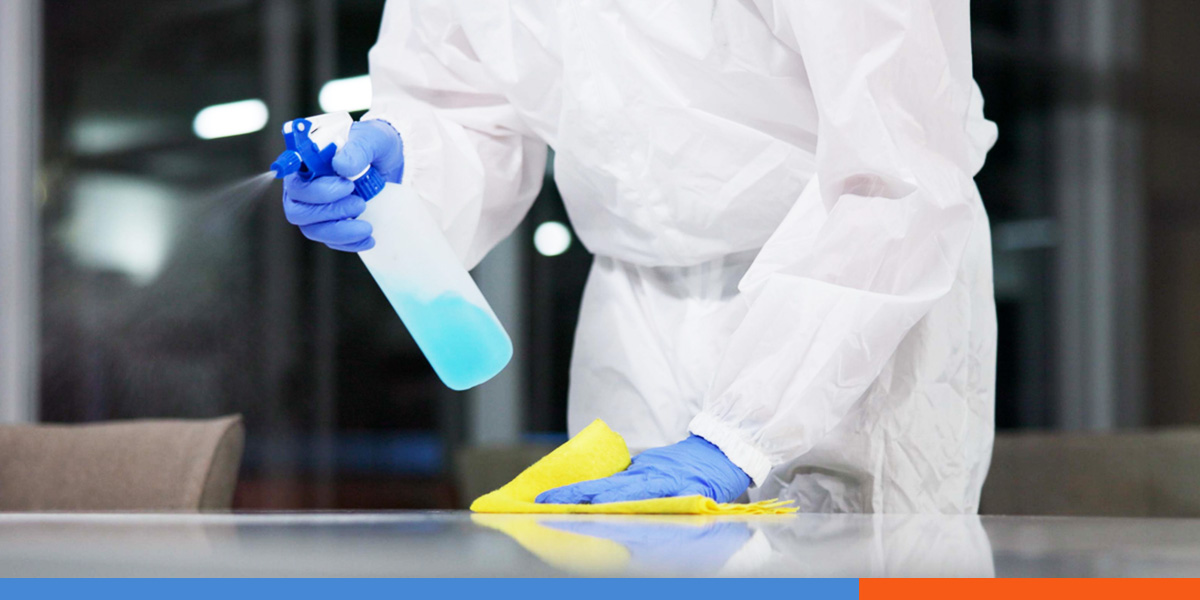
Cross-contamination might sound like a concern limited to kitchens, but every commercial facility faces similar risks. Foodborne illness affects 48 million people in the U.S. every year, but the risk of cross-contamination extends far beyond commercial kitchens. Pathogens that cause gastrointestinal illnesses — including norovirus, E. coli and Staphylococcus aureus — can spread to restroom door handles, break room appliances, exam room surfaces and gym equipment.
Using harsher disinfectants isn’t always the secret to preventing cross-contamination. It requires proven cleaning protocols, EPA-registered products and trained technicians who understand how to prevent the spread of germs.
Together, these systems protect employees, visitors and your reputation while creating a cleaner, healthier environment.
What Is Cross-Contamination?
Cross-contamination is the transfer of harmful viruses, bacteria, allergens or other contaminants from one surface, object or area to another. In commercial facilities, it can occur in three primary ways.
- Biological cross-contamination: Bacteria, viruses and other pathogens spread between people, surfaces or equipment.
- Chemical cross-contamination: Cleaning chemicals or other hazardous substances unintentionally transfer to food-contact surfaces or other sensitive areas.
- Physical cross-contamination: Foreign materials, such as dust, dirt or debris, move from one area to another.
Though preventing cross-contamination in food is a priority in kitchens, this phenomenon can occur anywhere employees, customers, students, patients or visitors share workspaces, equipment or frequently touched surfaces. Shared cleaning tools, high-touch areas and inadequate cleaning practices can contribute to the spread of contaminants.
The impact is significant. According to the Centers for Disease Control and Prevention, six major pathogens are responsible for around 9.9 million domestically acquired illnesses, and seven cause 53,300 hospitalizations each year. Research also shows that pathogens such as Salmonella, E. coli and Staphylococcus aureus can persist even in inhospitable environments, making consistent cleaning and disinfection essential.
Fortunately, cross-contamination is largely preventable. Facility managers can create healthier workplaces and reduce risk by understanding the differences between cleaning, sanitizing and disinfecting.
How to Prevent Cross-Contamination in Commercial Facilities
The best way to avoid cross-contamination is through consistent systems rather than isolated cleaning tasks. Certified protocols, trained technicians, documented schedules and EPA-registered disinfectants all work together to reduce risk.
Use EPA-Registered Disinfectants
While conventional cleaning products reduce surface germs, EPA-registered disinfectants meet more stringent standards, giving facility managers confidence that high-touch surfaces are receiving treatment with products tested against specific pathogens.
When used according to the manufacturer’s instructions, they form the backbone of an effective cross-contamination prevention strategy by killing specific pathogens.
The following protocol points are critical.
- Contact time determines effectiveness: Disinfectants must remain wet on the surface for the full contact time listed on the label. Wiping them away too soon can reduce their effectiveness.
- Surface compatibility varies by product: Some EPA-registered disinfectants are only for hard, nonporous surfaces, while others are appropriate for use on some soft surfaces. Always follow the manufacturer’s recommendations.
- Medical-grade disinfectants target specific pathogens: Hospital-grade EPA-registered disinfectants have proven effective against organisms such as Staphylococcus aureus, Salmonella and Pseudomonas aeruginosa when used according to label directions.
- Follow the manufacturer’s instructions: Proper dilution, application methods, contact time and pretreating heavily soiled surfaces contribute to effective disinfection.
Implement a Color-Coded Cleaning System
Color-coded microfiber cloth and mop systems reduce cross-contamination by designating cleaning tools for specific areas. This simple visual system reduces the risk of cross-contamination during routine cleaning and shift changes by showing technicians which equipment to use in each area.
Color-coded tools are most effective when supported by documented procedures, proper equipment storage, regular laundering and trained technicians who consistently follow established protocols.
- Red for restroom fixtures: Toilets and urinals receive assigned equipment that never leaves the restroom zone.
- Yellow for restroom surfaces: Sinks, counters and other restroom touchpoints use separate equipment from toilet areas.
- Green for food service areas: Kitchen areas and employee break rooms maintain dedicated cleaning tools.
- Blue for general areas: Offices, lobbies and common spaces use equipment that stays segregated from higher-risk zones.
High-Risk Zones in Commercial Facilities
Not every area of your facility carries the same level of risk. Spaces with frequent hand contact, shared equipment or vulnerable occupants require more rigorous cleaning protocols than lower-traffic areas.
When you know where germs are most likely to spread, you can prioritize cleaning, protect building occupants and reduce operational disruptions.
Restrooms and Break Rooms
Restrooms and break rooms are two critical areas to prioritize in a cross-contamination prevention plan. Professional cleaning providers build these touchpoints into documented protocols, ensuring high-risk areas receive consistent attention.
- Restrooms require strict standards: Fecal pathogens, including E. coli and norovirus, can survive on flush handles, faucets, countertops and door handles, making dedicated cleaning tools and consistent disinfection essential.
- Break rooms become contamination hot spots: Routine cleaning and disinfection schedules should include high-touch surfaces such as light switches, vending machines, water dispensers, microwave buttons, refrigerator handles, coffee machines and countertops.
- Contamination spreads rapidly: Researchers found that contamination introduced to only two surfaces spread to 13 surfaces within four hours, highlighting how quickly germs can travel through shared spaces.
- People spread germs unknowingly: In the same study, more than half of observed people touched two or more shared surfaces, reinforcing the importance of routine cleaning throughout the day.
Medical Offices, Schools and Gyms
Specific environments introduce unique cross-contamination challenges that require higher-level cleaning standards than many general commercial environments. Every facility has different occupancy levels, traffic patterns and regulatory requirements, so a one-size-fits-all approach rarely delivers consistent results.
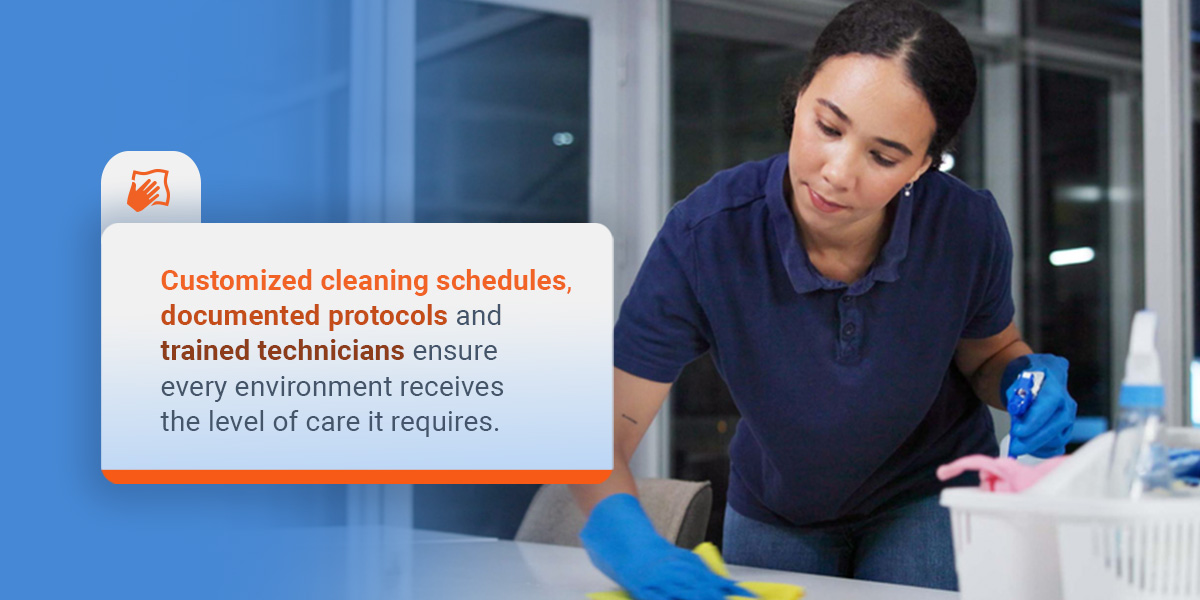
Customized cleaning schedules, documented protocols and trained technicians ensure every environment receives the level of care it requires.
- Medical offices require specialized protocols: Waiting rooms, exam tables, shared equipment and frequently touched surfaces all need careful attention. Disinfecting patient care areas between appointments reduces the risk of transmission.
- Schools experience constant contact: Routine cleaning and disinfection mitigate opportunities for respiratory viruses to spread throughout classrooms and common areas.
- Gyms create high-contact environments: Exercise machines, free weights, mats and locker rooms experience constant use throughout the day, making routine cleaning essential.
- Some bacteria survive for extended periods: According to CDC guidance, MRSA can survive on certain surfaces for hours, days or even weeks without proper cleaning and disinfection.
Cleaning Protocols That Keep Staff and Visitors Safe
Even the most effective disinfectants can’t deliver consistent results without trained people and documented processes behind them. Equipment, cleaning products, documented schedules and supervisory oversight work together to reduce cross-contamination and create healthier environments.
- Documented protocols support compliance: OSHA requires sanitary workplace conditions. Written cleaning procedures allow teams to deliver consistent results while reinforcing facility-wide health and safety requirements.
- Training improves consistency: According to CDC research, certified training improves food safety. Knowledgeable cleaning teams are in a better position to follow established practices and reduce cross-contamination risks.
- Good habits reduce risk: Research also shows that training enhances hand hygiene and compliance with established procedures, limiting opportunities for germs to spread throughout shared environments.
- Regular oversight keeps standards consistent: Supervisor reviews, routine quality inspections and ongoing communication ensure everyone follows established cleaning methods.
Contact Clean MD Commercial Cleaning
A healthier, safer facility starts with a partnership. Businesses that work with Clean MD Commercial Cleaning reduce cross-contamination risks through customized cleaning protocols and consistent quality oversight tailored to their specific needs.
Contact the Clean MD team to schedule a customized cleaning protocol assessment for your facility.