
Every Western New York business owner knows that their facility’s cleanliness directly influences client confidence, employee health and regulatory compliance. However, setting a professional cleaning schedule requires certainty, not guesswork.
Cleaning too infrequently increases the risk of health code violations, customer complaints and illness transmission, while cleaning too often wastes resources on unnecessary services. Finding the perfect balance depends on your facility’s unique characteristics.
The Core Factors That Determine Your Cleaning Schedule
Cleaning frequency must be a calculated decision, which is why an effective cleaning plan begins with an assessment of your facility’s risk level, usage patterns and environmental conditions.
Several factors will affect your assessment outcome:
Business Type and Industry Compliance
Every industry must adhere to vastly different local, state and national regulatory requirements and standards. Healthcare facilities follow CDC environmental clean procedures, while the FDA Food Code sets the standard for food service operations. Office buildings have somewhat more flexibility, but legally, all workplaces must be as clean as the nature of their operations allows.
OSHA 1910.141 establishes many of these standards, which a professional cleaning partner must adhere to. Failure to maintain compliant cleaning protocols can result in fines, failed inspections and operational shutdowns.
Daily Foot Traffic and Building Occupancy
The number of people touching door handles, using restrooms and preparing food in your break room daily directly correlates with cleaning frequency needs.
High-traffic areas require more frequent attention to maintain acceptable hygiene standards. An assessment that effectively analyzes how many people use a space for which purposes will result in a cleaning schedule that effectively combats accumulating dirt.
Identifying High-Touch vs. Low-Traffic Zones
Not all areas within your facility carry the same contamination risk. High-touch surfaces, such as light switches and shared equipment, accumulate pathogens rapidly and require frequent disinfection. Low-traffic areas like storage rooms and individual offices pose a significantly lower risk.
Focusing cleaning effort on high-touch zones is a cost-effective way to improve hygiene. This targeted approach ensures that critical surfaces receive appropriate attention while avoiding unnecessary cleaning in minimal-risk areas.
Seasonal Demands
Western New York’s climate creates cleaning challenges that vary throughout the year. Winter brings salt and slush that harm flooring and create slip hazards, but frequent floor care during these months can prevent long-term damage and maintain safety. Spring and fall introduce mud and allergens that require additional attention at entry points and in ventilation systems.
Adjusting cleaning frequency based on seasonal conditions protects your flooring investment and maintains a professional appearance despite challenging weather.
Recommended Cleaning Frequencies by Facility Type
Every business has different needs based on who uses their building and what happens inside it. Even so, facilities with similar size and function often experience the same challenges, making it possible to outline reliable guidelines for each facility type.
For General Offices and Professional Buildings
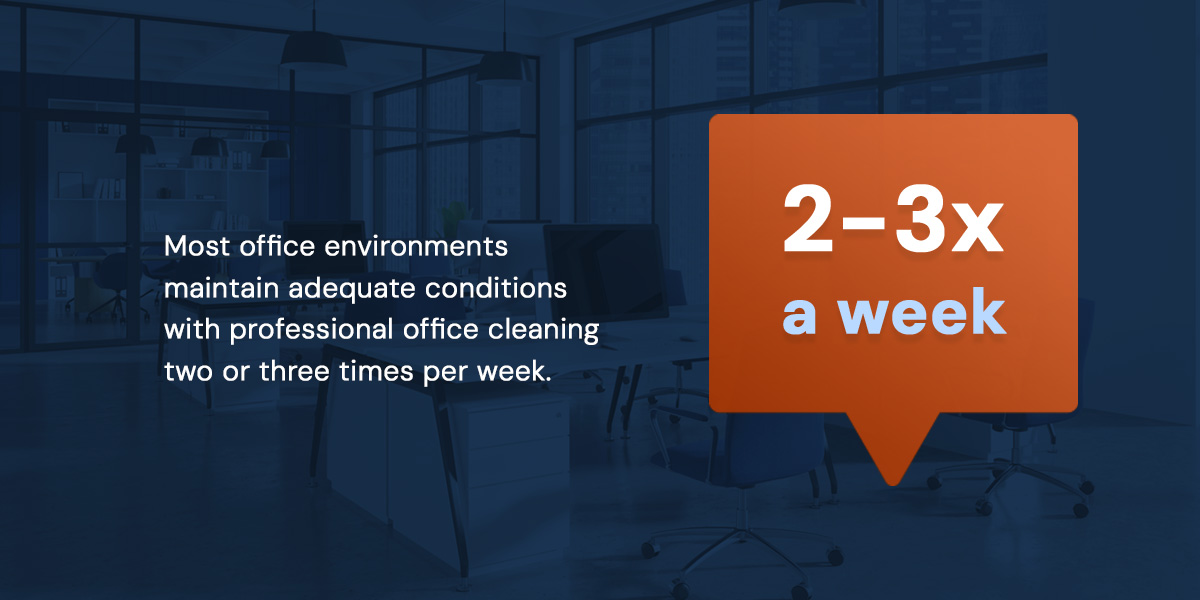
Most office environments maintain adequate conditions with professional office cleaning two or three times per week. This frequency addresses hygiene needs in break rooms, restrooms and common areas while controlling costs.
Offices with 50 or more employees or heavy client traffic usually benefit from cleaning every day, but that doesn’t mean every task needs to happen daily. Jobs that address slow-building dirt or wear can shift to a weekly or monthly schedule, keeping the space tidy without overservicing it.
For Retail Stores and Customer-Facing Spaces
Since first impressions significantly impact customer perception and purchasing decisions, keeping your retail space clean is vital. There’s a risk of contamination every time a customer interacts with any high-touch zone, such as checkout counters, dressing room handles and product displays, which is why daily cleaning is the recommended standard for retail spaces. Floors, restrooms and checkout areas require particular attention, as visible dirt or unpleasant odors directly impact customer confidence and sales performance.
For Restaurants and Food Service Facilities
Daily professional cleaning is nonnegotiable in food service environments, with local and state regulations mandating strict sanitation protocols to protect public health. Failure to meet these cleanliness codes can result in fines and loss of operating licenses.
Food service facility cleaning requirements will vary between the front and back of the house. Each area presents different challenges. Front-of-house cleaning is critical for customer perception and brand reputation, as it influences the dining experience and customer satisfaction. Back-of-house cleaning is vital for food safety standards, employee working conditions and passing health inspections.
For Medical Offices and Healthcare Clinics
The risk of pathogen transmission in healthcare settings is much higher than in any other setting, necessitating stringent cleaning standards. Daily, medical-grade cleaning of the premises and high-touch equipment is essential for meeting compliance standards and ensuring patient safety.
Health providers should hire a professional team to effectively sanitize their premises. Look for a partner with ample experience cleaning and disinfecting healthcare facilities using hospital-grade products.
Sample Cleaning Checklists
Every cleaning plan is unique, but most facilities share a core set of tasks. You must determine how often each one needs to happen and organizing them into a schedule that keeps the space consistently tidy and welcoming.
Daily Cleaning Checklist
A professional and ongoing janitorial service can fulfill these priorities daily. Your commercial space can quickly develop hygiene and cleanliness issues without this focused attention.
- Sanitizing restrooms: High-touch surfaces and fixtures harbor bacteria that multiply rapidly without disinfection.
- Removing trash: Accumulated waste creates odors, attracts pests and presents an unprofessional appearance.
- Cleaning high-contact surfaces: Food residue and frequent hand contact make these surfaces contamination hot spots.
- Wiping down kitchen appliances: Shared kitchen equipment requires daily maintenance to prevent cross-contamination.
- Disinfecting light switches and door handles: These transfer points can spread illness among occupants throughout the day.
Weekly Cleaning Checklist
Some areas of your commercial space don’t require daily care but still need diligent maintenance.
- Dusting all surfaces: Accumulated dust affects air quality and creates an unprofessional appearance.
- Vacuuming carpets and mopping floors: While high-traffic zones may require more frequent care, most areas maintain an acceptable condition with weekly deep cleaning.
- Wiping door frames and window sills: These often-overlooked areas accumulate visible dirt over time.
Monthly and Quarterly Tasks
These intensive responsibilities don’t require frequent completion. Monitor these areas over several months to get an accurate idea of how often they need cleaning.
- Deep-cleaning carpets: Professional extraction removes embedded soil that regular vacuuming cannot address.
- Stripping and waxing floors: Flooring needs periodic refinishing to maintain its protective coating and appearance.
- Wiping baseboards: Baseboards collect dust and may look dingy if you ignore them.
Create Your Custom Cleaning Plan With Clean MD Commercial Cleaning

Deciding how frequently you should complete each cleaning task can be challenging, which is why a professional partner can be so valuable.
Clean MD makes it easy to develop a standard cleaning schedule. With ISO 8 and ISO 9 certification, plus OSHA and IICRC credentials, we routinely meet and exceed many industry regulations.
Our friendly team will assess your facility’s traffic patterns, identify high-risk zones and build a cleaning schedule that works for you, regardless of your industry or facility size. So whether you need a professional cleaning schedule in Buffalo or want to determine your ideal office maintenance timing in Rochester, we’re here to help.
To experience the peace of mind that comes with professional business cleaning services in WNY, contact us today.