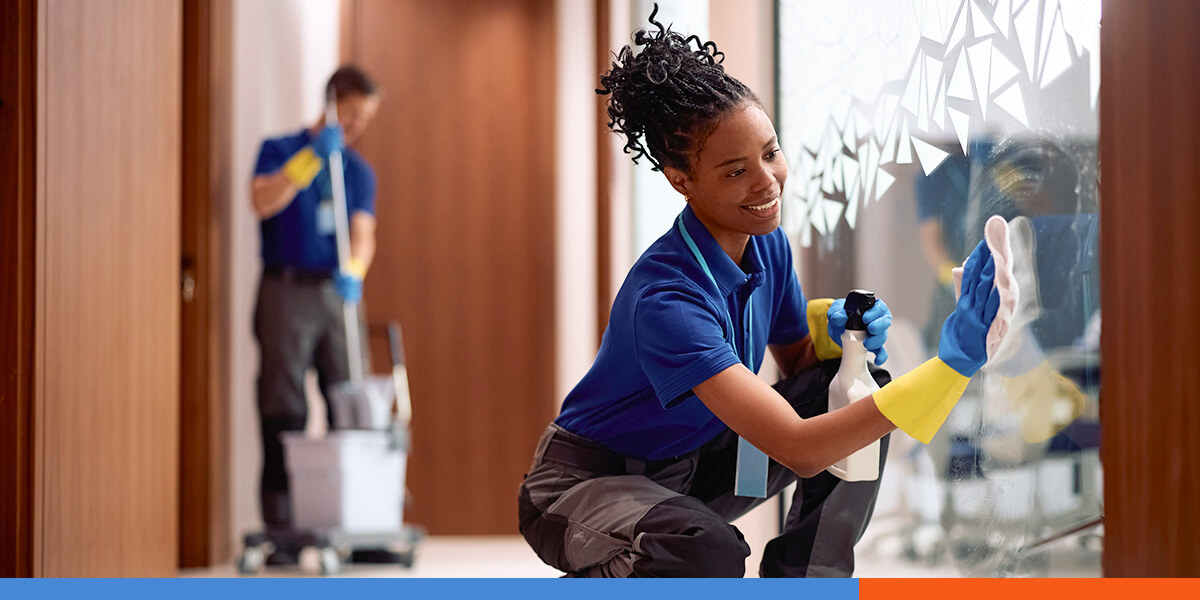
Allergy season is ramping up across Western New York, and the sounds of sneezing and coughing are becoming the new office soundtrack. While these symptoms seem minor, they signal a costly business problem. Up to 1.5 million asthma cases among workers could be attributed to employment conditions, representing a widespread health challenge affecting businesses nationwide.
Business owners and site managers must acknowledge that a visibly clean workplace isn’t necessarily a healthy one. Standard cleaning often misses deep allergen reservoirs in carpets, upholstery and HVAC systems. Professional allergen reduction techniques address these hidden sources, protecting employee and customer health and improving your commercial spaces.
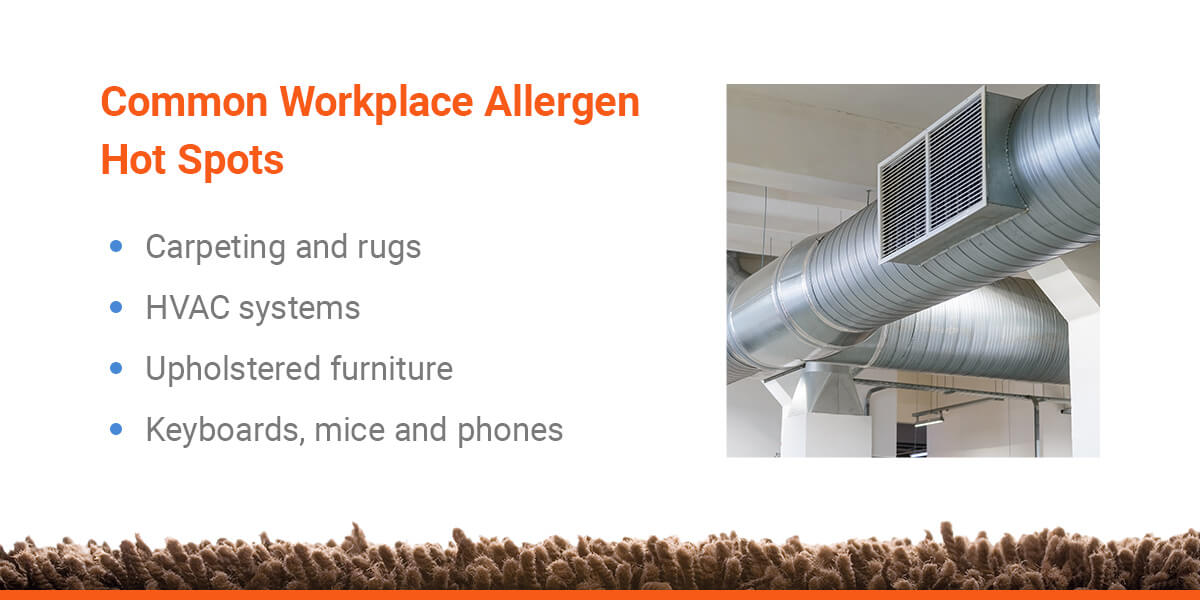
Common Workplace Allergen Hot Spots
Most facilities have specific areas where allergens accumulate and continuously re-enter the air that employees breathe. Understanding these hot spots is the first step toward effective allergen reduction cleaning:
-
Carpeting and rugs: Carpets trap allergens deep within their fibers, where standard vacuuming can’t reach them. Foot traffic continuously kicks particles back into the air. Deep-seated dirt, pollen and dust mites require professional carpet cleaning techniques to be effectively removed.
-
HVAC systems: Vents and ducts play a large role in your facility’s air quality. HVAC systems can circulate dust, pollen and other contaminants throughout an entire office if not properly maintained. According to the Environmental Protection Agency (EPA), indoor air can often be more polluted than outdoor air. Proper ventilation maintenance is essential for improving commercial air quality.
-
Upholstered furniture: Office chairs, waiting area couches, fabric-covered cubicle walls, drapes and blinds are magnets for dust and dander. These furnishings hold allergens in breathing zones where employees spend most of their day. Regular deep cleaning of office furniture helps eliminate these reservoirs.
-
Keyboards, mice and phones: Keyboard spaces create perfect traps for dust, food crumbs and pet dander. Phones pose an even greater risk because they’re touched frequently and held directly to the face, creating a route for allergens and bacteria to enter the body.
Professional Allergen Cleaning Techniques
Standard janitorial services focus on visible cleanliness, but professional allergen reduction cleaning goes deeper. These specialized methods target microscopic particles that trigger allergy and asthma symptoms.
HEPA-Filtered Vacuums
High efficiency particulate air (HEPA) filters represent a critical advancement in indoor air purification technology. A HEPA filter is a pleated mechanical air filter that can remove at least 99.97% or more of dust, pollen, mold and other airborne particles with a size of 0.3 microns.
HEPA filtration delivers critical benefits for commercial spaces, especially during allergy season cleaning, when pollen and dust mite counts are highest:
-
Traps microscopic allergens: Most allergens fall within the 0.3-micron size range, making HEPA filtration essential for effective allergen control.
-
Prevents airborne redistribution: Standard vacuums often blow microscopic particles back into the air during cleaning, actually worsening air quality temporarily. HEPA-filtered equipment instead traps these particles during cleaning, preventing dust from becoming airborne.
-
Reduces allergy symptoms: This technology is particularly crucial for reducing sneezing, congestion and asthma symptoms in commercial settings.
Professional cleaning services that prioritize using equipment like HEPA-filter vacuums demonstrate a commitment to both environmental responsibility and employee health.
Hot Water Extraction
Hot water extraction uses high-pressure hot water to agitate carpet and upholstery fibers, loosening and removing deep-seated dirt, dust mites and allergens. Unlike surface vacuums that only address the top layer, hot water extraction reaches deep into textile fibers to extract particles entirely. This process significantly lowers indoor allergen concentrations and improves overall air quality.
The method offers several distinct advantages for allergen reduction:
-
Temperature kills organisms: The high heat eliminates dust mites, bacteria and other biological contaminants that thrive in flooring and furnishings.
-
Physically removes allergens: Rather than simply redistributing particles, extraction pulls them out of the material completely.
-
Deep penetration: The pressurized system reaches allergen reservoirs that accumulate over months or years of regular use.
Advanced Disinfection Methods
Hospital-grade disinfectants and certified cleaning protocols are highly effective at killing bacteria, viruses and biological contaminants like mold spores that can trigger allergies and illness. Unlike household cleaning products, these professional-grade solutions provide measurable protection:
-
EPA-registered effectiveness: Hospital-grade disinfectants are EPA-registered and proven more effective at killing vegetative bacteria and viruses than retail products, providing protection in environments with vulnerable individuals or high foot traffic.
-
Cross-contamination prevention: Using proper disinfectants according to established protocols is critical in a health-focused cleaning approach. Systematic processes ensure that cleaning tools used in restrooms don’t come into contact with kitchen surfaces, for example.
-
Medical-grade standards: Facilities can benefit from partnering with medical-grade cleaning standards that bring this level of professional rigor to commercial spaces.
Benefits of Professional Allergen Removal for Employees and Customers
Investing in professional allergen reduction cleaning delivers tangible benefits that extend beyond a clean appearance. These services improve the experience for everyone who enters your facility.
Improved Employee Productivity
Presenteeism — the practice of working while sick — creates a hidden drain on productivity that can be easy to overlook. Getting professional allergen cleaning means employees experience fewer symptoms and can focus better on their duties.
Research shows that a single week of inadequate allergy control can cost businesses around $507.80 per person due to reduced productivity. Improving indoor environmental quality can net savings by building a healthier workforce that can bring their best every day.
Fewer Employee Sick Days
Asthma contributes to substantial work and school absenteeism, affecting millions of people each year and creating measurable productivity losses for businesses nationwide. Better environmental conditions with fewer allergy and asthma triggers lead to fewer sick days.
Better Company Culture and Customer Experience
Professional allergen reduction represents a tangible investment in your people, demonstrating proactive leadership about employee health and wellness. Improved air quality has many benefits for the company as a whole, including improved morale and increased job satisfaction.
Customers also benefit from allergen-free spaces, as clean, healthy environments make powerful first impressions. Spaces free of airborne irritants signal professionalism and commitment to visitor comfort.
Get Started With Clean MD Commercial Cleaning
Professional commercial cleaning services designed to reduce allergens can address the root causes of indoor air quality issues. Clean MD Commercial Cleaning offers specialized allergen reduction services for businesses throughout Western New York. With medical-grade cleaning protocols, HEPA-filtered equipment and hospital-grade disinfectants, we help facilities create healthier workspaces during allergy season and year-round.
If your facility needs professional allergen reduction cleaning, contact Clean MD for a quote or to discuss how our services can support your employee wellness goals.